
Documented AWC company work · San Diego County
The wall opening defined the repair. The coating decision remained separate.
A documented South Park stucco repair shows how opening dimensions, exposed conditions, texture blending, and paint scope should be treated as separate decisions.
From All World Construction LLC
Owner Austin Mitchell · About AWC · Verify CSLB #1063936 · Updated
Completed localized stucco repair in South Park, San Diego. The photos show the opening and the unpainted texture stage. The documented scope covered the patch; primer, paint, color coat, window work, and full-wall refinishing were separate. The record does not establish what originally caused the damage.
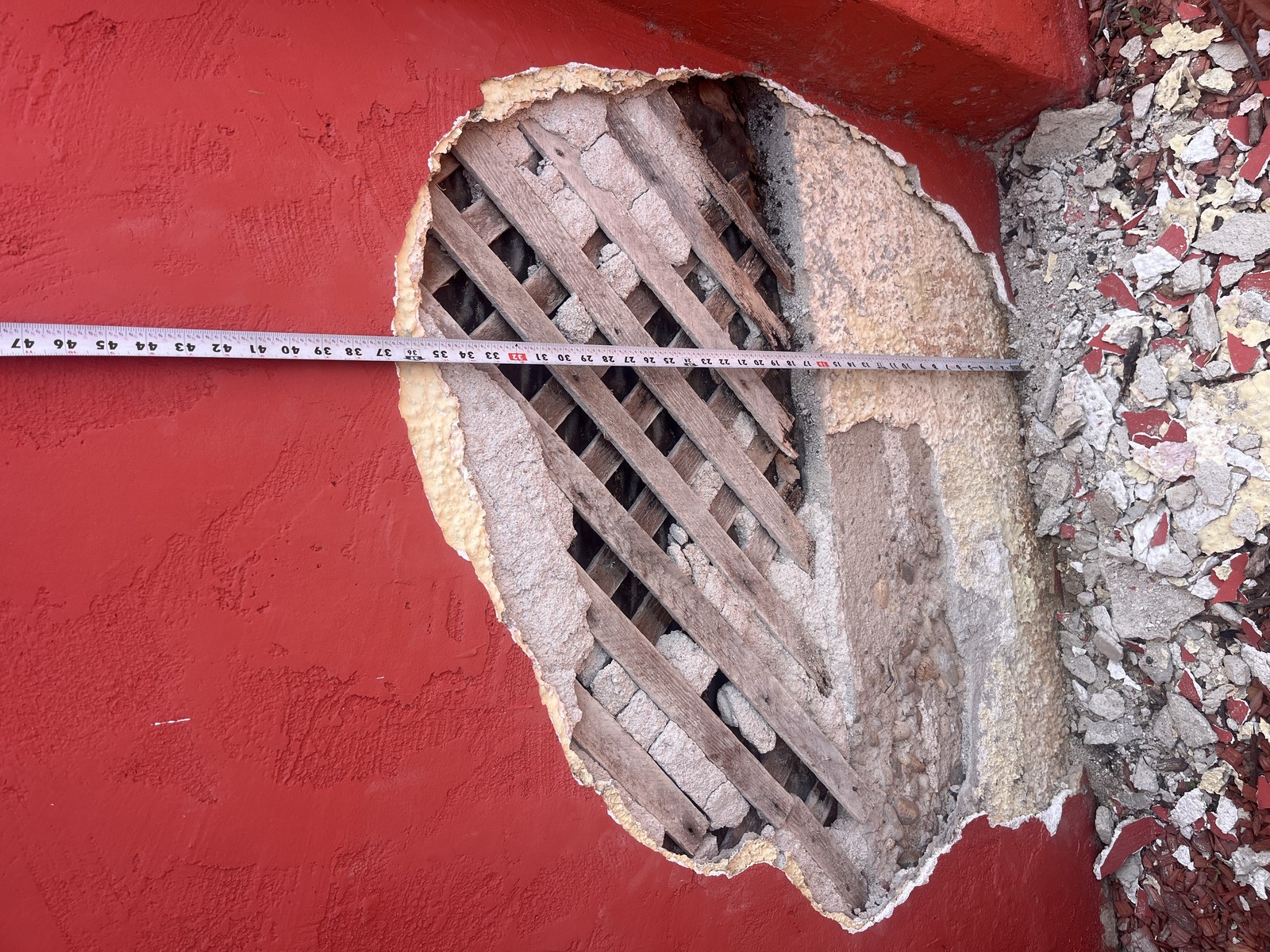
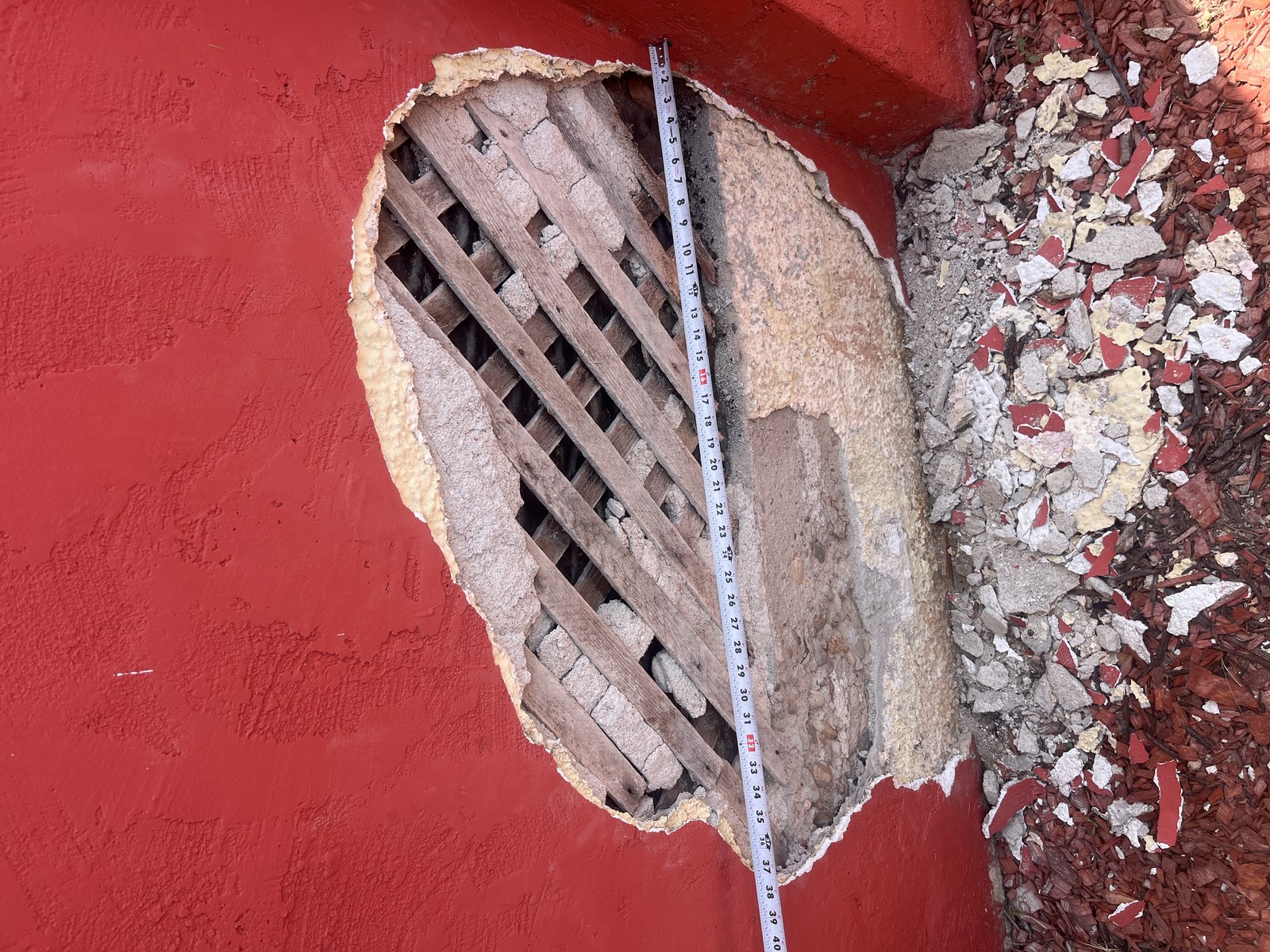
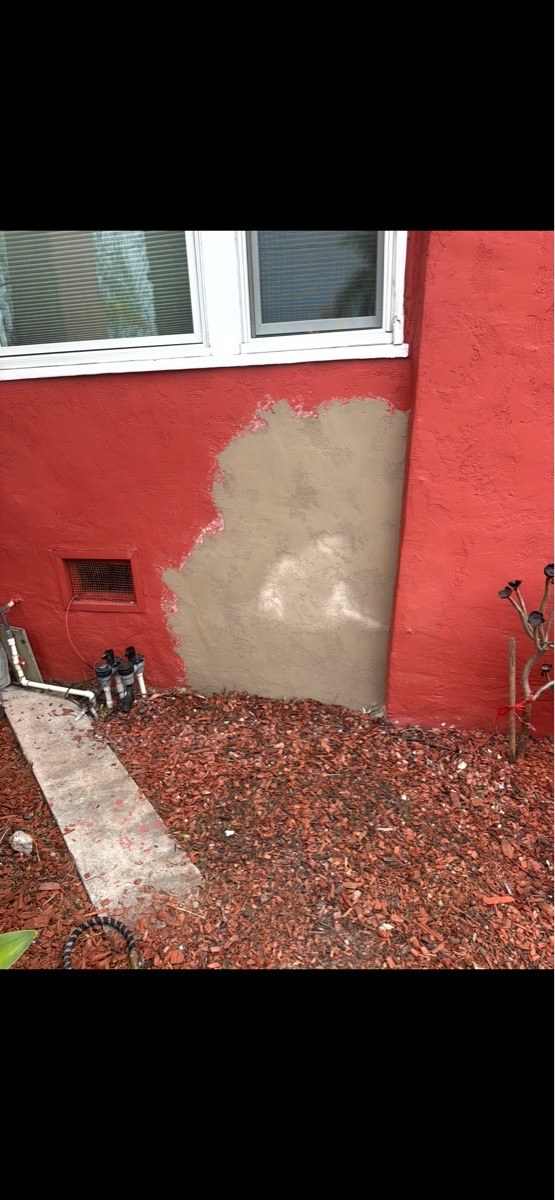
This completed AWC project was in South Park, San Diego, not Rancho Santa Fe. It is useful here because the opening-stage and completion photos show two boundaries owners should understand before approving a stucco repair: the area physically opened and rebuilt, and the larger finish or coating area that may be needed when appearance matters.
The opening makes the physical scope measurable
The approved repair was a localized area approximately three feet by four feet. Loose or failed material was removed inside that boundary, and the surrounding edges were prepared where they were sound enough to remain. The two opening photos record the working dimensions and the existing wood lath that became visible after removal.
That record matters because a wall can look simple after it is closed. Opening-stage photos preserve what was actually exposed and help distinguish the repaired area from nearby wall surfaces that were never included. They also create a useful decision point: if conditions beyond the opening appear to change the planned work, the owner can review a revised scope before the boundary expands.
An exposed layer is a review point, not a diagnosis
The photos show existing layers and a defined opening. They do not prove the source of cracking or deterioration, and this project was not documented as a leak investigation or moisture-source correction. A careful proposal keeps that distinction clear. The visible symptom, the material removed, and the cause of failure are related questions, but they are not interchangeable facts.
For an owner, the practical step is to document the location, nearby openings, drainage paths, and any interior symptoms before work starts. Avoid probing, removing stucco, or opening the wall yourself. Where the cause is uncertain or the damage appears broader, a site evaluation can define the investigation and repair sequence before pricing is treated as final.
Texture completion does not settle the color boundary
Compatible exterior repair materials were applied based on the exposed conditions, the patch was built flush, and finish material was applied. Its edges were feathered to reduce the transition, with the texture blended as closely as practical. The completion photo shows the result at that stage: a narrow, unpainted patch against an existing red wall.
That image is useful precisely because it does not imitate a finished paint match. Texture, paint, and color are separate scope items. Existing coatings age, fade, collect dirt, and reflect light differently. Even a well-shaped patch can remain visible when only the repair area is painted. If appearance across a prominent elevation matters, the proposal should state whether the decision is localized touch-up, a larger coating break, or a broader wall finish area.
Set the boundary before comparing proposals
A clear stucco proposal should identify the opening or removal limit, the materials and build-back steps, the texture target, and the coating limit. It should also say how nearby windows, planting, paving, and occupied areas will be protected. Completion photos should correspond to those written boundaries so the owner can review the work against the approved scope.
Localized repair can be appropriate when the affected area is defined and the surrounding wall is serviceable. A broader finish or elevation scope may make more sense when multiple repairs, aged coatings, or appearance expectations extend beyond one patch. Those choices should be made deliberately rather than hidden inside the word “match.”