
Stucco and paint coordination
Coordinate stucco and paint as separate scopes with one finish plan
Define preparation, primer, paint limits, retained coatings, sealant interfaces, color decisions, and acceptance after stucco repair.
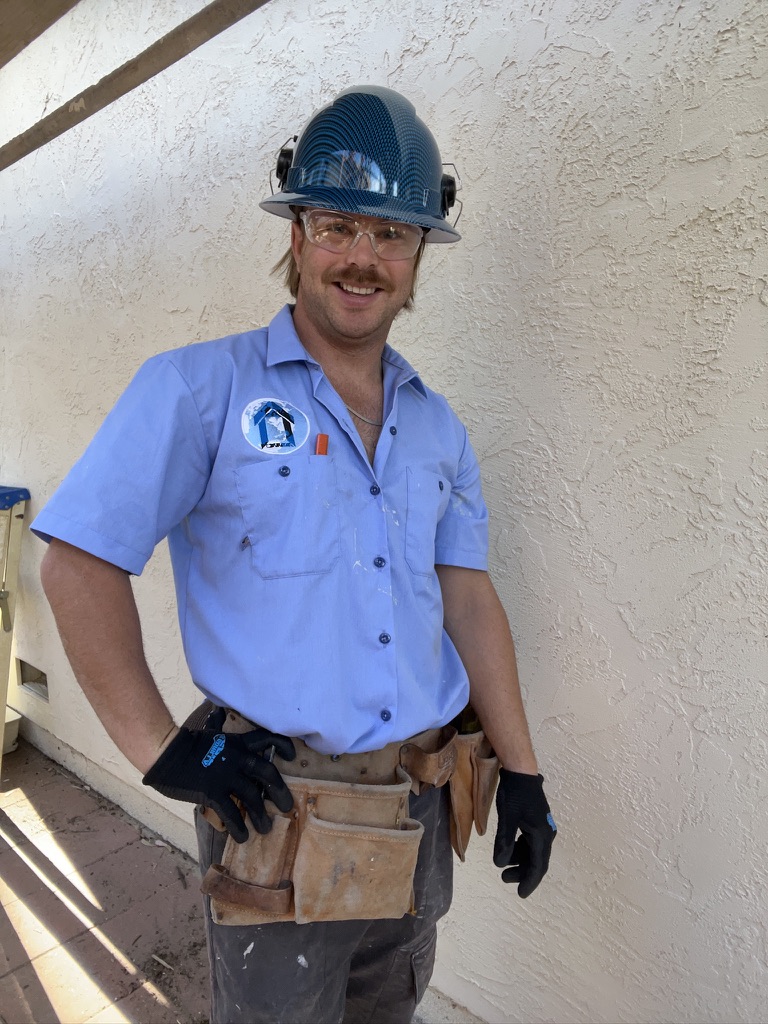
From All World Construction LLC
Owner Austin Mitchell · About AWC · Verify CSLB #1063936 · Updated
Stucco repair and painting are connected, but they are not the same operation. New repair material may differ in porosity, texture, cure condition, and color from the surrounding coated wall. Existing paint may be faded, chalked, layered over earlier patches, or different from the owner’s current color record. A complete proposal names the handoff between the stucco work and the coating work instead of assuming paint will hide every transition.
Document the existing finish system
Record visible coating condition, sheen, color variation, peeling, chalking, staining, sealant, prior touchups, and unpainted or differently coated surfaces. Note observations without claiming a product, number of coats, adhesion, or concealed wall condition that has not been verified.
Collect available paint records, cans, labels, invoices, or color schedules. Treat them as leads until the actual wall and product information are compared. A color name alone may not describe age, sheen, base, or application differences.
- Photograph full walls and close finish details.
- Separate confirmed product records from owner recollection.
- Identify sealant, trim, metal, and other non-stucco interfaces.
Set the stucco-to-paint release point
Define who confirms the repaired surface is ready for the specified coating steps. The sequence may depend on the repair system, environmental conditions, product direction, and project review. Avoid a universal calendar promise.
Keep repair samples, finish boundaries, and required access available until the appropriate review occurs. If cracking, moisture, contamination, or another changed condition appears, document it before coating conceals the evidence.
Choose a paint boundary the owner can see
Compare spot coating, architectural panel limits, corner-to-corner work, or a broader elevation. Each option should state preparation, primer, coats, product basis, masking, fixtures, trim, sealant, and cleanup as applicable.
A localized touchup can remain visible because of color, sheen, texture, age, application, and light. A broader boundary can improve continuity but does not correct a substrate problem outside the approved stucco repair. Keep those decisions separate.
Inspect both trade scopes at closeout
Review repaired texture before coating when the sequence allows, then review the completed coating from agreed positions. When field verification is needed, AWC offers a $250 Site Evaluation + Written Bid Package. The $250 is credited back when the quoted work is approved within 30 days.
The closeout record should identify repaired locations, primer and coating limits, retained surfaces, excluded cracks or elevations, sealant status, touchup items, and any stored product information. That record supports later maintenance without representing the entire exterior as newly restored.
Planning checklist
- Existing coating observations and records are collected.
- Stucco readiness and paint responsibility are assigned.
- Changed conditions are reviewed before coating.
- Preparation, primer, coats, and boundaries are stated.
- Localized transition limits are disclosed.
- Closeout separates repaired, coated, retained, and excluded areas.
Common questions
Will paint hide a stucco patch?
Paint can coordinate color and sheen, but texture, surface profile, age, and lighting can still reveal a transition.
Can an old paint can establish the current match?
It is useful evidence, but product age, wall weathering, sheen, base, and past applications still require review.
Who decides when new stucco is ready for paint?
The project sequence should assign that decision using the approved repair and coating systems and actual conditions.
Related AWC field context
AWC field guide
Stucco Crack? Why the Finish May Not Be the Source
Why a visible crack should be documented without treating the finish as automatic cause proof.
AWC field guide
What HOA Boards and Property Managers Should Ask for in a Stucco Repair Proposal
Questions that clarify repair boundaries, finish expectations, exclusions, access, and documentation.